
A quiet garage door is a healthy garage door. The moment yours starts squeaking, grinding, rattling, or banging, it is not just an annoyance — it is a message. Every unusual sound your garage door makes is a signal from one of its many moving parts, telling you something is worn, loose, dry, or on the verge of failing.
Knowing how to read those sounds is the difference between a quick, inexpensive fix and an unexpected breakdown that leaves you stranded. Below, we break down the most common noisy garage door sounds, what each one means, and when it is time to call a professional for noisy garage door repair.
Why Garage Doors Get Noisy Over Time
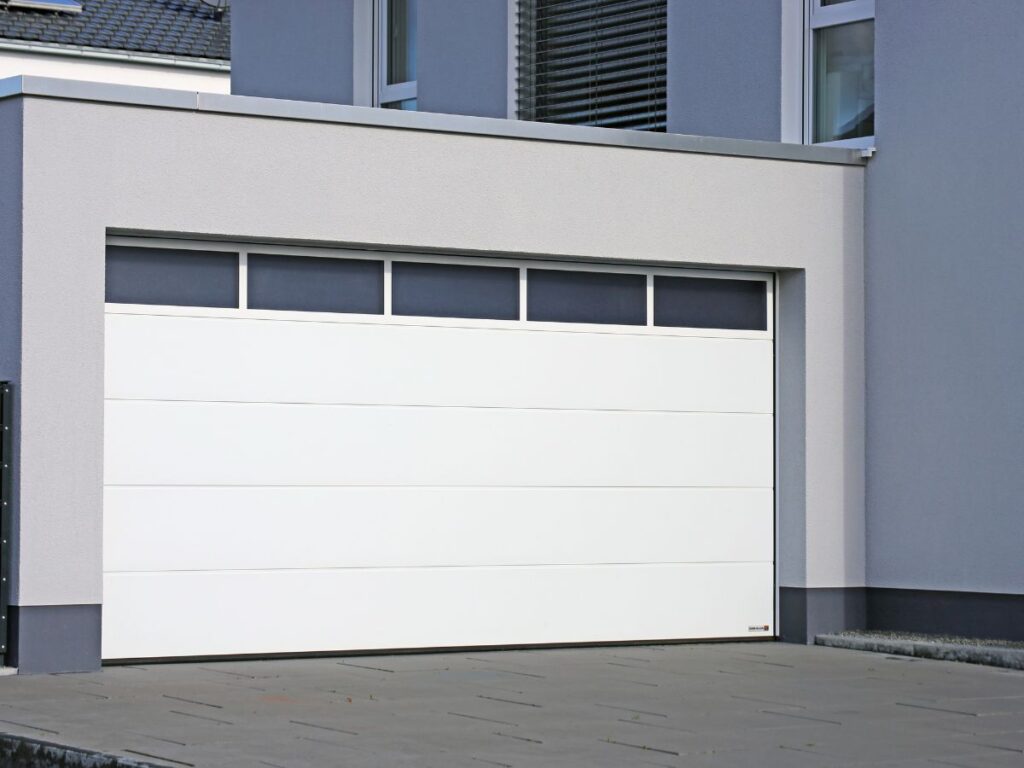
Garage doors are complex mechanical systems. A standard door has springs, rollers, hinges, cables, tracks, panels, and a motorized opener — all moving in coordination, hundreds or thousands of times a year. Over time, lubricants dry out, hardware vibrates loose, and parts wear down. When any component begins to degrade, it usually announces itself through sound before it fails completely.
The type of noise matters enormously. A high-pitched squeak and a deep grinding sound come from very different places in the system and call for very different responses. Getting familiar with these distinctions helps you act early — and helps our technicians arrive prepared.
Squeaking or Squealing — Dry Metal Friction
A high-pitched squeak or squeal during operation is almost always a lubrication problem. Metal components — rollers, hinges, torsion spring coils, and the opener’s chain or screw drive — need regular lubrication to move smoothly against each other. When the lubricant dries out or wears off, friction builds and produces that familiar squealing sound.
What to do: Apply a silicone-based or white lithium garage door lubricant to all moving metal parts — rollers, hinge pins, torsion spring coils, and the opener drive. Avoid WD-40, which disperses rather than lubricates and can attract dirt into tight spaces. This is the first thing covered in any professional garage door tune-up, and it often resolves squeaking entirely in under 20 minutes.
If the squeak persists after lubrication, the rollers or hinges may be worn through and need replacing rather than just lubricating. Our garage door tune-up and lubrication service in LaGrange County includes a full inspection of every moving component so nothing gets missed.
Grinding — Worn Rollers or Opener Drive Problems
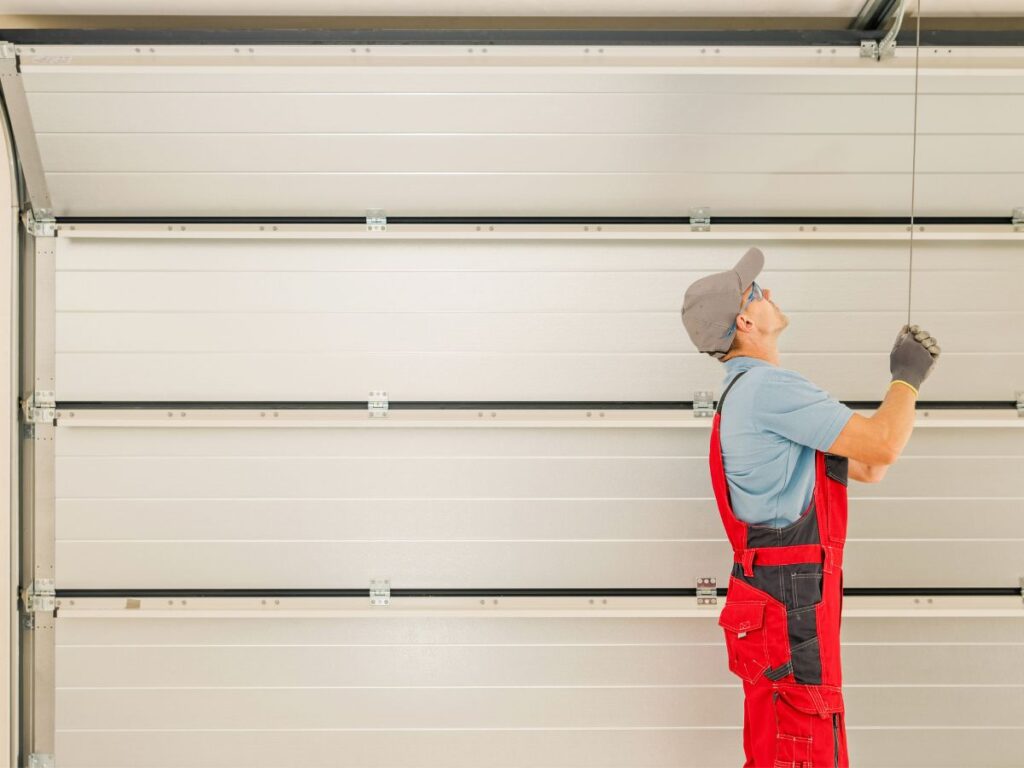
Grinding is a more serious sound than squeaking and should not be ignored. It typically means metal is dragging against metal in a way that is actively causing damage. The two most common sources are worn rollers grinding inside the track channel, and a failing gear or drive mechanism inside the opener unit itself.
Roller grinding:
Nylon rollers develop flat spots and cracks over years of use. When a roller loses its round shape, it no longer rolls — it drags. That dragging produces a grinding sound and puts uneven stress on the track, the hinges, and the door panels. Inspect each roller for visible cracking, chipping, or deformation. Damaged rollers need replacement, not just lubrication.
Opener drive grinding:
If the grinding comes from the opener unit rather than the door itself — especially if it worsens when the door is under load — the drive gear, worm gear, or chain sprocket inside the opener may be worn or stripping. Opener drive components can often be replaced individually without needing a full opener replacement, but it requires opening the unit and diagnosing which part has failed.
Both roller wear and opener drive failure get worse the longer they go unaddressed — what starts as grinding can eventually lead to a door that comes off its track or an opener that burns out entirely. Our roller replacement and opener repair service in LaGrange County covers both, usually in a single visit.
Banging or Loud Popping — Springs Under Stress
A sharp bang from the garage — especially one that happens while the door is moving — is one of the more alarming sounds a homeowner can hear. There are two main causes, and one of them is a genuine emergency.
Popping during operation:
A repetitive popping or clunking sound as the door travels up or down usually means a torsion spring is unevenly tensioned, a cable is catching on the drum, or a panel hinge is stiff and flexing under load. These issues cause the spring or cable to release tension in small, sudden bursts rather than smoothly — which produces that popping sound.
A single loud bang:
A single very loud bang from the garage — particularly if the door immediately stops working — almost always means the torsion spring has snapped. This is an emergency. Do not attempt to operate the door. The spring is the primary counterbalance for the door’s weight, and running the opener against a broken spring will damage the motor. A broken spring also makes the door extremely heavy and unstable to move manually.
If you heard a single bang and your door has stopped working, call us straight away. Our emergency torsion spring repair service in LaGrange County is available for same-day response, and our technicians carry the most common spring sizes on every truck.
Rattling — Loose Hardware
A general rattling sound that runs through the whole operation cycle — rather than coming from one specific point — almost always means loose hardware. Nuts, bolts, lag screws, and bracket fasteners gradually vibrate loose after thousands of open-and-close cycles. The opener chain or rail can also develop a rattle if it has gone slack.
What to do: Walk both sides of the door while it is stationary and inspect all visible hardware. Use a socket wrench to snug up any loose bolts and bracket screws — firm but not overtightened, which can strip threads or distort the bracket. Check the opener chain or belt for slack, and adjust the tensioner if needed according to your opener manual.
Rattling hardware is one of the easiest fixes in garage door maintenance, but left alone it accelerates wear across the entire system. A loose hinge bracket, for example, puts extra lateral stress on adjacent rollers and track sections every time the door moves.
Scraping — Misalignment or a Binding Door
A scraping sound — as though something is dragging along a surface — usually means the door panels are rubbing against the track, the weatherstripping has folded and is catching, or the door itself is out of balance and binding against the frame as it travels.
To check door balance: disconnect the opener using the emergency release cord and manually lift the door to about waist height. Release it carefully. A well-balanced door will stay in place. If it drops to the floor or rises toward the ceiling on its own, the spring tension is off — and that imbalance is likely the source of your scraping.
Spring tension and door balance are not homeowner adjustments — getting the tension wrong can cause the spring to fail prematurely or the door to behave dangerously. Our garage door maintenance and balance adjustment service includes a full balance check and spring tension assessment as standard.
Vibrating or Rumbling — Opener Motor Issues
A vibrating or rumbling noise from the opener unit itself usually points to a loose ceiling mount, worn drive gears, or an aging motor. Chain drive openers are naturally louder than belt drive models, but worsening rumble means the unit is working harder than it should. Opener units 10 to 15 years old that are getting progressively louder are often nearing the end of their useful life — a modern replacement will be quieter, faster, and compatible with smartphone control.
When Noise Signals Something More Serious
Most garage door noises start as minor irritants and can be resolved with basic maintenance — lubrication, hardware tightening, or a roller swap. But noise can also be the early warning sign of a component approaching failure. Take the problem more seriously if:
- The sound has changed significantly in character or volume over a short period
- The door is noticeably slower or more labored than it used to be
- The noise is accompanied by visible shaking, jerking, or hesitation mid-travel
- You can see physical damage — frayed cable, cracked roller, separated hinge, bent track
- The opener hesitates, reverses unexpectedly, or fails to complete a full open or close cycle
Any of these combinations warrants a professional inspection. Catching a worn spring or failing roller early costs far less than dealing with a complete breakdown — or a door that comes off track at the wrong moment.
The Value of a Regular Garage Door Tune-Up
The most effective way to prevent noisy garage door problems — and to catch the ones that are already developing — is a regular annual garage door tune-up from LaGrange County Door. Our maintenance visits cover:
- Full lubrication of all moving parts — rollers, hinges, spring coils, track, opener drive
- Hardware inspection and tightening throughout the door and opener system
- Spring tension check and door balance assessment
- Roller and hinge condition evaluation — replacement flagged before failure
- Safety sensor testing and realignment
- Opener force, speed, and auto-reverse calibration
- Visual inspection of cables, drums, weatherstripping, and panels
Most tune-ups take under an hour and can extend the operational life of your door system by years. We recommend scheduling one annually — or twice a year if your door gets heavy daily use.
Thinking About a Quieter, More Reliable Door?
If your garage door has become a daily source of noise and frustration despite repeated maintenance, it may simply be time for a new door. Modern doors are significantly quieter, better insulated, and more reliable than models from 10 or 15 years ago. Browse our residential garage door options available in LaGrange County — including steel, wood, aluminum, and carriage-house styles — to find an upgrade that fits your home and your budget.
When you are ready to move forward, our professional garage door installation team in LaGrange County handles the full project — removal of the old door, installation of the new one, and a complete test of every component before we leave.
Get Your Noisy Garage Door Repaired in LaGrange County
Do not let a noisy garage door get worse. The sounds your door is making right now are the earliest and cheapest version of a problem that will only grow if left alone. Whether it needs a quick lubrication, a roller swap, a spring inspection, or a full tune-up, the team at LaGrange County Door is ready to sort it out.
Call us at (260) 367-1819 to schedule a noisy garage door repair visit or annual maintenance appointment. We serve homeowners and businesses throughout LaGrange County and Northeastern Indiana — and we will have your door running quietly and reliably again.
Call (260) 367-1819 — Garage Door Tune-Up & Repair Available in LaGrange County